
TPO vs. Modified Bitumen for Houston Flat Roofs
Both are proven systems on flat and low-slope commercial roofs in the Houston area. TPO is a white, heat-welded single-ply membrane that reflects heat and usually installs faster. Modified bitumen is a thicker, two-ply system that tolerates foot traffic and imperfect drainage better. The right choice depends on your roof’s drainage, how much traffic it takes, what is on it, and how long you plan to own the building.
Want an answer for your actual building? Request a commercial roof inspection or call (281) 202-4382.
What TPO is
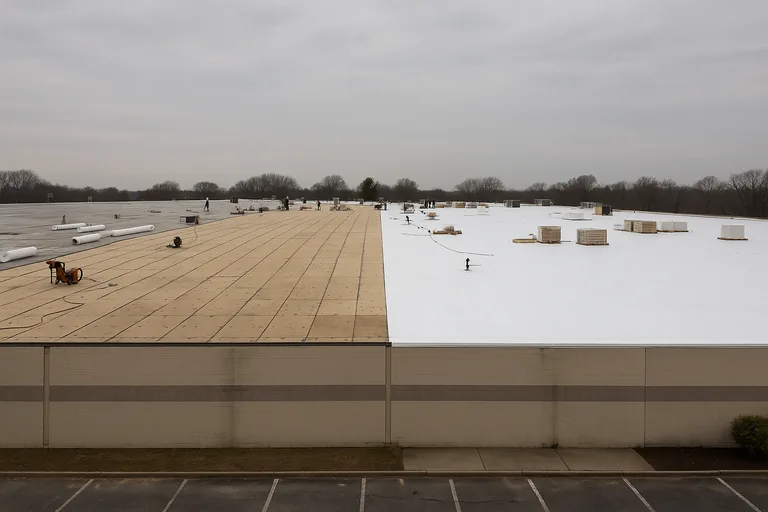
TPO (thermoplastic polyolefin) is a single-ply membrane rolled out in wide sheets and joined with hot-air welded seams. The white surface reflects a large share of the sun’s heat, which matters on a Texas roof in August and on buildings where the top floor or warehouse space runs hot. Because the sheets are wide and the seams are welded rather than glued, installation on a large, open roof tends to move quickly.
What modified bitumen is
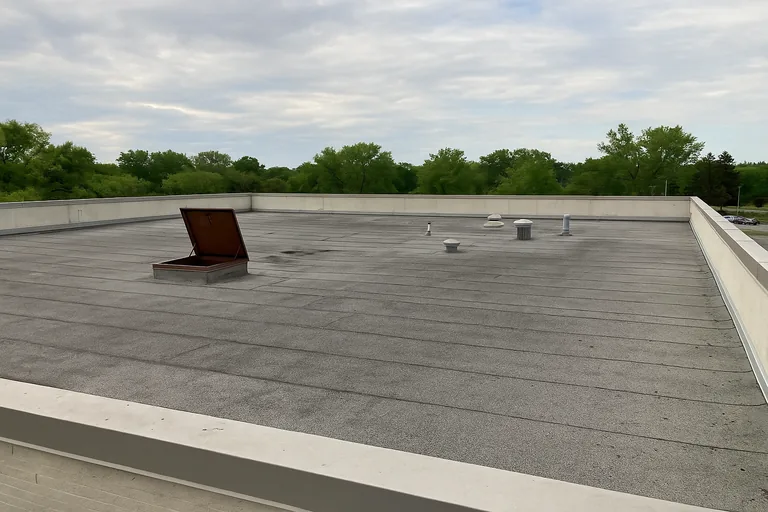
Modified bitumen is asphalt reinforced with polymers and a fabric mat, installed in two plies — a base sheet and a granulated cap sheet — either torch-applied or set in cold adhesive. Two layers make it thicker and more forgiving: it handles foot traffic from HVAC technicians, puncture from dropped tools, and areas where water sits longer than it should.
Where each one fits
| Roof condition | Usually points toward |
|---|---|
| Large, open roof with good drainage | TPO — fast install, reflective surface |
| Heavy foot traffic or lots of rooftop equipment | Modified bitumen — two plies take the abuse better |
| Spots where water ponds after rain | Fix the drainage first; modified bitumen is more forgiving where some ponding remains |
| Top floor or warehouse space that runs hot | TPO — the white surface reflects heat |
| Grease or chemical exhaust on the roof (restaurants) | Neither by default — PVC is often specified here |
| Existing roof still structurally sound | Possibly a coating instead of either — see below |
What Houston weather does to both
Our roofs deal with long, hot summers, intense UV, heavy downpours that test drainage, and hail. On any flat roof, the membrane itself is rarely what fails first. Leaks almost always start at seams, at the flashing around HVAC curbs and pipes, at the edges, and where blocked drains let water sit. A well-installed TPO or modified bitumen roof with clear drains and sound flashing will outlast a better material installed carelessly.
Repair, re-cover or replace?
Before choosing a new system, find out what the current roof actually needs. A localized seam failure or a bad flashing detail is a repair. If the membrane is aged but the insulation underneath is dry, a re-cover or a silicone or elastomeric coating may extend its life. If the insulation is wet, the roof needs to come off — a new membrane over wet insulation traps the moisture and fails from below. That is why we photograph every condition and check the insulation before recommending anything.
How to decide for your building
- Get the roof inspected and find out whether the insulation is wet.
- Map where water ponds and whether the drains are doing their job.
- Count the rooftop equipment and how often people walk the roof.
- Decide how long you plan to own the building.
- Compare written, line-item bids for the same scope — not one total price against another.
We install and repair TPO, PVC, EPDM, modified bitumen, metal and coatings across Fort Bend County and west Houston, so we have no reason to push one system over another. See our commercial roofing page for the full list, or request an inspection and get a written recommendation for your building.
Common questions
Is TPO or modified bitumen better for a flat roof in Houston?
Neither is better everywhere. TPO suits large, well-drained roofs where heat reflection and a fast install matter. Modified bitumen suits roofs with heavy foot traffic, lots of equipment, or drainage that lets some water sit. An inspection of the drains, deck and insulation decides it.
Which lasts longer, TPO or modified bitumen?
Both can give long service on Houston-area commercial roofs. Installation quality, membrane thickness, drainage and maintenance affect lifespan more than the choice between the two. Most leaks start at seams, flashing and blocked drains rather than in the middle of the membrane.
Does TPO keep a building cooler?
A white TPO membrane reflects much more of the sun’s heat than a dark roof surface, which helps top floors and warehouse spaces that run hot in a Texas summer. Insulation and ventilation still matter.
Can you put TPO over an existing modified bitumen roof?
Sometimes, if the existing roof and insulation are dry and sound and the building can take the added layer. If the insulation is wet, the old roof has to come off first. We check this with an inspection before recommending a re-cover.
Who installs TPO and modified bitumen roofs in Fort Bend County?
CS Roofing Concepts, based in Richmond, Texas, installs and repairs TPO, PVC, EPDM, modified bitumen, metal and coated commercial roofs across Fort Bend County and west Houston. Call (281) 202-4382 or request a commercial roof inspection online.