
Attic Ventilation in Richmond, TX — Installation & Repair
Proper attic ventilation is one of the most effective ways to extend the life of a Fort Bend roof. Without it, summer heat builds to 140–155°F in the attic space, accelerating shingle degradation and forcing your AC to work against a radiant heat source. We install and repair ridge vents, soffit vents, gable vents, and power ventilators throughout Richmond, Rosenberg, and Fort Bend County.
- Free inspection — problem diagnosed before any work is proposed
- Ridge, soffit, gable, and powered ventilation systems
- Richmond, Rosenberg, Missouri City, Katy, Sugar Land & Fulshear
- Written scope before anything starts
“They found the problem in an hour — the insulation had covered all the soffit vents during the last upgrade. Ridge vent added and the upstairs room dropped a noticeable amount.”
— Homeowner, Richmond TX
Most Fort Bend County homes were built between the 1970s and the 2000s, when ventilation standards were less consistent than they are now. Ridge venting, when installed at all, was often undersized or blocked by insulation added during later energy upgrades. Hip roofs — common in Richmond and Sugar Land — reduce available ridge length, making it harder to meet the 1-to-150 ventilation ratio that prevents heat and moisture buildup.
Why attic ventilation matters more in Fort Bend County
Gulf Coast summers push attic temperatures to 140–155°F without adequate ventilation. That heat degrades asphalt shingles from the underside, accelerates adhesive failure in the underlayment, and forces conditioned air to work against a radiant ceiling rather than the outside temperature. Fort Bend’s humidity adds a second problem: warm, moist air rises from the living space into the attic. Without a continuous exhaust path it condenses on the decking and framing — the same conditions that produce mold and cause OSB to delaminate. Both problems can be traced to inadequate ventilation, and both shorten the life of a full roof replacement if the system is not corrected before new materials go on.
What we inspect and what we fix
An attic ventilation inspection covers the intake side (soffit and gable vents) and the exhaust side (ridge vents, roof vents, power ventilators) as a system. The most common problem we find in Fort Bend homes is soffit vents blocked by insulation pushed to the eave — the intake is cut off, and the ridge vent draws warm air up from the living space instead of cool outside air. The second most common: bathroom exhaust fans dumping humid air directly into the attic rather than through the roof. Both are correctable without replacing the full roof system, and both are identified during a free inspection before any work is proposed.
Ventilation types we install and repair
- Ridge vents — continuous ventilation along the peak. Paired with open soffit intakes, this is the most effective passive system for Texas hip and gable roofs. No moving parts, no electricity.
- Soffit vents — intake vents along the eave. Cool outside air enters at the bottom of the attic and pushes hot, humid air toward the ridge. Blocked soffit vents are the single most common cause of undersized effective ventilation in Fort Bend.
- Gable vents — triangular openings at the gable end. Effective on simple gable roofs; less so on hip roofs where the gable area is limited.
- Power ventilators — electric or solar-powered fans that move air regardless of natural convection. Used when passive systems cannot meet the required ratio, or as a supplement in peak summer heat.
- Baffles — foam or cardboard channels installed between rafters to keep insulation from blocking the soffit intake path. Often the lowest-cost fix for a ventilation system that looks complete on paper but has lost its intake.
Ventilation and storm damage
High-wind events commonly damage ridge vent caps, knock gable vent louvers out of alignment, and drive debris into soffit openings. After a significant Fort Bend storm, ventilation hardware is one of the areas we check alongside the shingles and flashing. An intake or exhaust blocked by storm debris behaves the same as a system that was never installed. Storm damage inspections and ventilation inspections are often done in the same visit.
When to call for an inspection
Fort Bend homes worth inspecting soon: any roof more than 10 years old that has not had a ventilation audit; homes with hot upper floors in summer; attics with mold history; and any roof that has had insulation added or upgraded without a ventilation check afterward. Interior water damage and ceiling repairs caused by condensation are often traced back to a ventilation system that was overwhelmed by moisture it could not exhaust. Related work on the building envelope — siding replacement or gutter work — is a good time to pull attic access and check the intake openings as well.
How much ventilation does an attic in Fort Bend County need?
The standard is 1 square foot of net free area for every 150 square feet of attic floor, split roughly evenly between intake (soffit vents) and exhaust (ridge vents or roof vents). In practice: a properly ventilated attic in a Fort Bend summer should feel very hot but not trap air. If you smell mildew, see irregular daylight patterns through the decking, or the upper floor runs noticeably hotter than the lower floor, those are reasons to have the system inspected rather than estimate by feel. We check both the ratio and whether the intake path is actually open — a system that looks complete on paper but has blocked soffit vents falls well short of the 1:150 target.
How much does it cost to add attic ventilation in Richmond?
The range is wide because the fix varies. Installing baffles to clear blocked soffit intake is low cost and often done in an afternoon. Adding a continuous ridge vent to an existing roof is a moderate job — a slot cut along the ridge, vent cap installed and sealed. A solar-powered attic fan runs higher. A full passive system upgrade (ridge vent, baffles, and open soffit) on a standard Fort Bend home sits somewhere between those. We find out during the free inspection exactly what is missing and price each component before any work starts — so the number you get is specific to your house, not an industry average.
What are my attic venting options?
The main types: continuous ridge vents (exhaust, along the peak, no moving parts), soffit vents (intake, along the eave), gable vents (exhaust or cross-ventilation at the gable end, less effective on hip roofs), and power ventilators — electric or solar-powered fans that move air regardless of natural convection. Baffles are not vents but are often the missing piece: they keep insulation from blocking soffit intake and are the cheapest fix when the system looks complete but isn’t working. For most Fort Bend homes, a continuous ridge vent with open soffit intake is the right passive system. Hip roofs — common in Richmond and Sugar Land — have less ridge length and sometimes need power supplementation.
My soffit vents are blocked by insulation — is that why my attic has problems?
Almost certainly yes if you have moisture, mold, or heat problems. Blocked soffit vents are the single most common ventilation failure we find in Fort Bend homes — insulation pushed to the eave during an energy upgrade seals off the intake path. When intake is gone, the ridge vent draws warm humid air up from the living space rather than cool outside air from below. The exhaust side is working harder than it should and pulling the wrong air. The fix is baffles installed between rafters to create a clear channel from the soffit to the attic floor above the insulation — straightforward once the problem is confirmed. We check the intake path as part of every ventilation inspection.
Can a ridge vent be installed on an existing roof?
Yes, in most cases. A continuous ridge vent requires cutting a slot along the ridge and covering it with the vent cap — this can be done on an existing roof without replacing the whole system. The cap is sealed and fastened the same way shingles are. The practical limit is the condition of the shingles near the ridge: if they are brittle from age, installing a ridge vent may require replacing the top two or three courses. We identify that during the inspection and price it before any work starts, not after the ridge is already open. Hip roofs in Richmond and Sugar Land have shorter ridge runs and may also benefit from supplemental off-ridge vents in the same project.
Is a solar attic fan worth installing in Fort Bend County?
In the right situation, yes. A solar-powered attic fan makes the most sense when the passive system is constrained — a hip roof with limited ridge length that can’t meet the 1:150 ratio on passive ventilation alone. It runs during the day when attic temperatures peak, costs nothing to operate, and adds no electrical load. The situation where it does not help: when the intake path is blocked. A fan that is pulling against a sealed soffit just creates negative pressure and draws conditioned air up from the living space — the opposite of what you want. Fixing the intake first is almost always the right call. We size and scope both options during the inspection so you can decide what fits your house.
Recent Work Around Fort Bend County
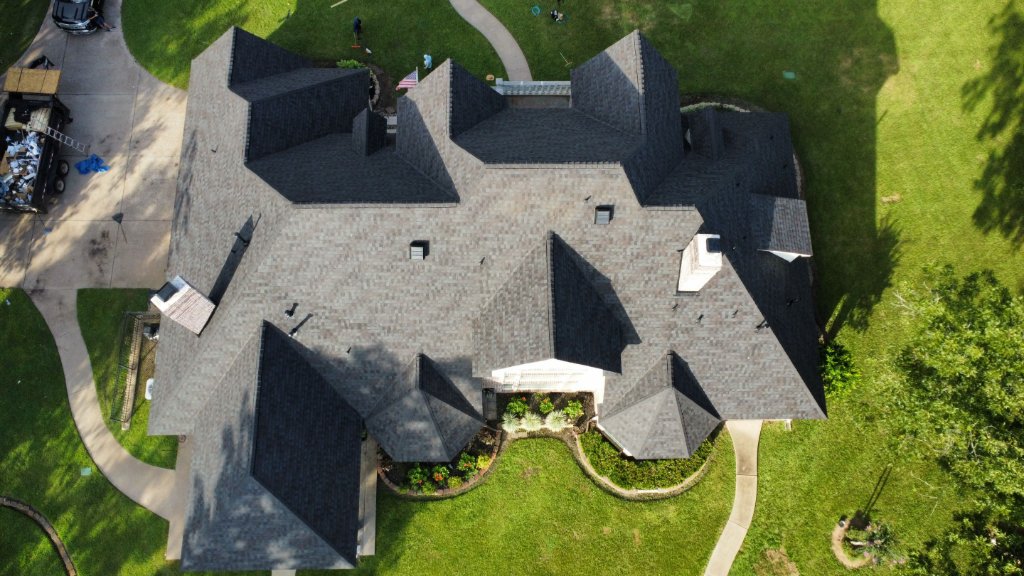
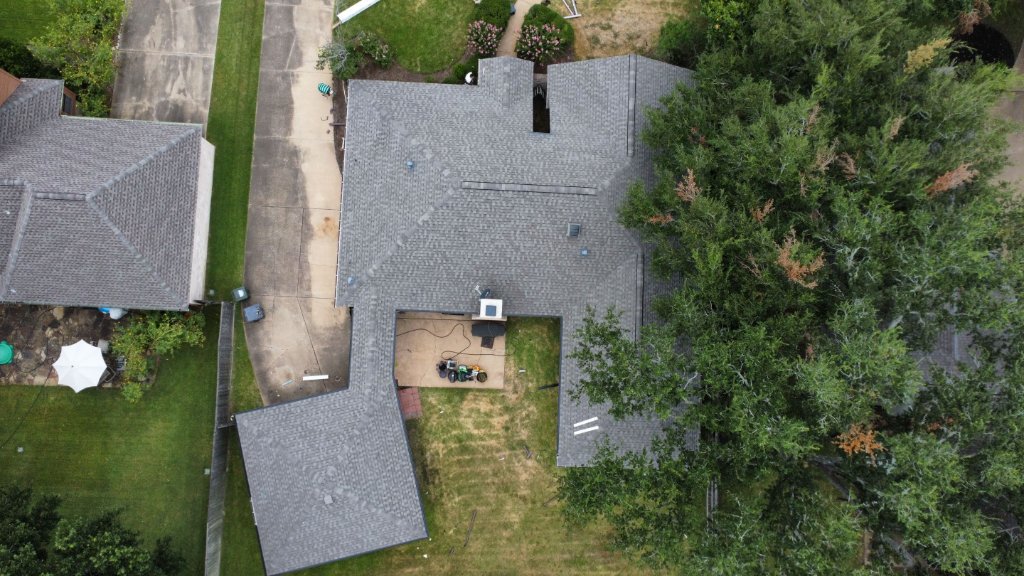
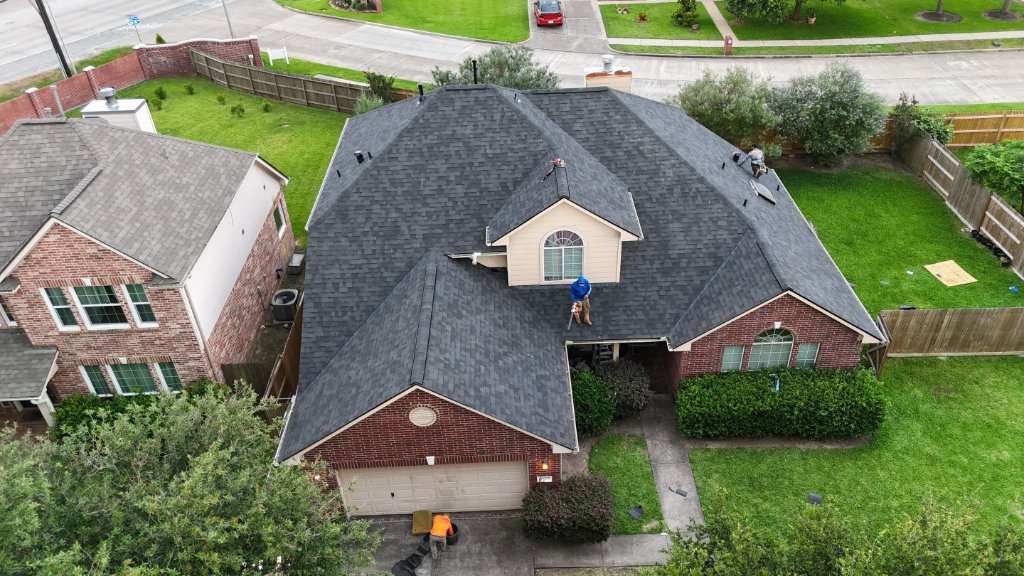
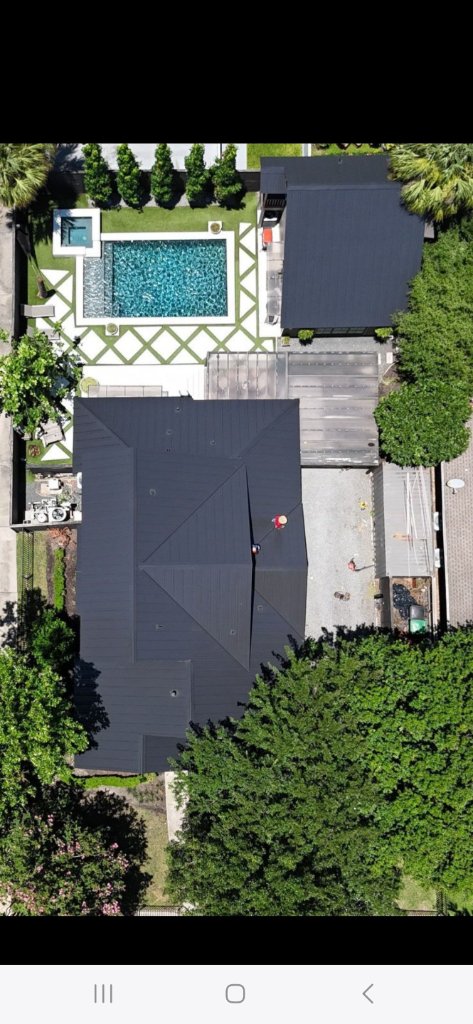
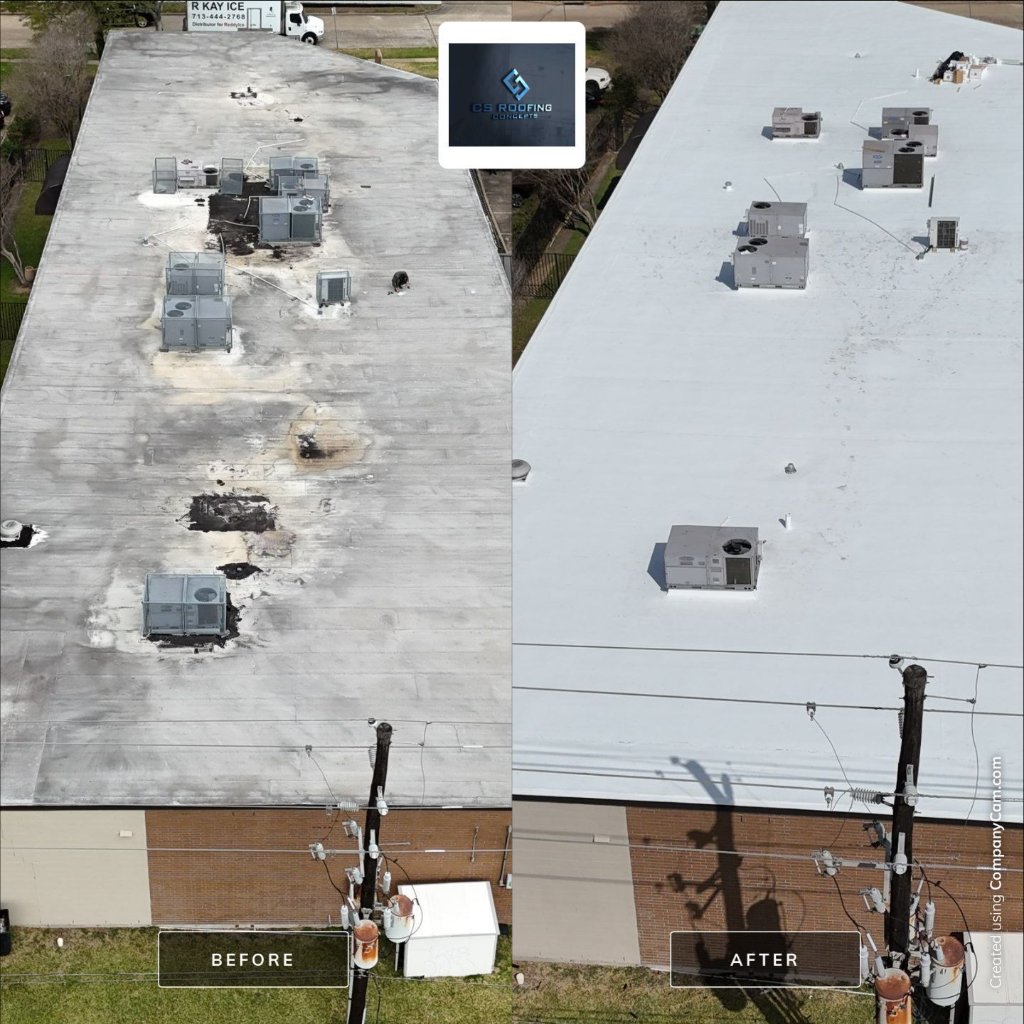
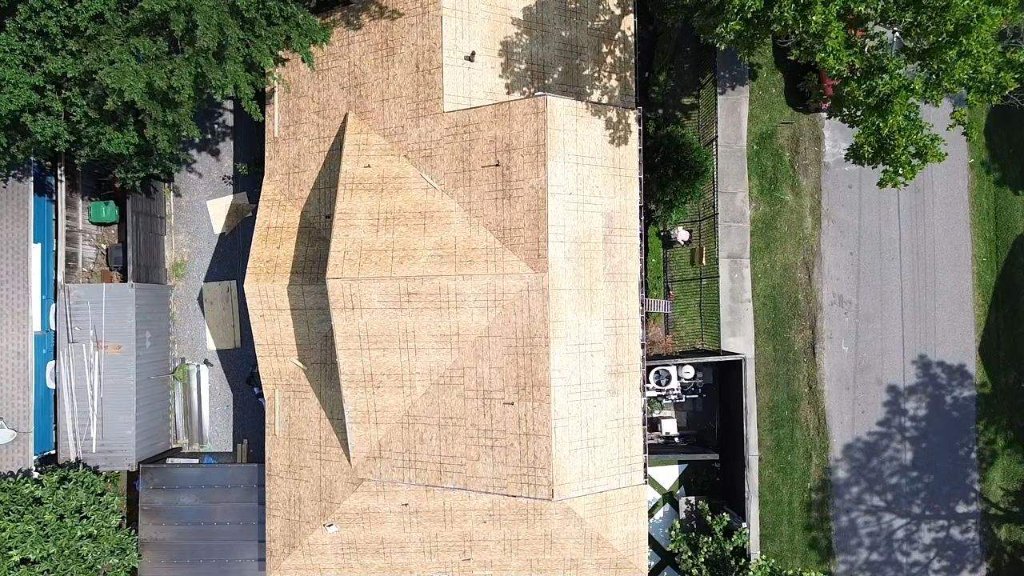
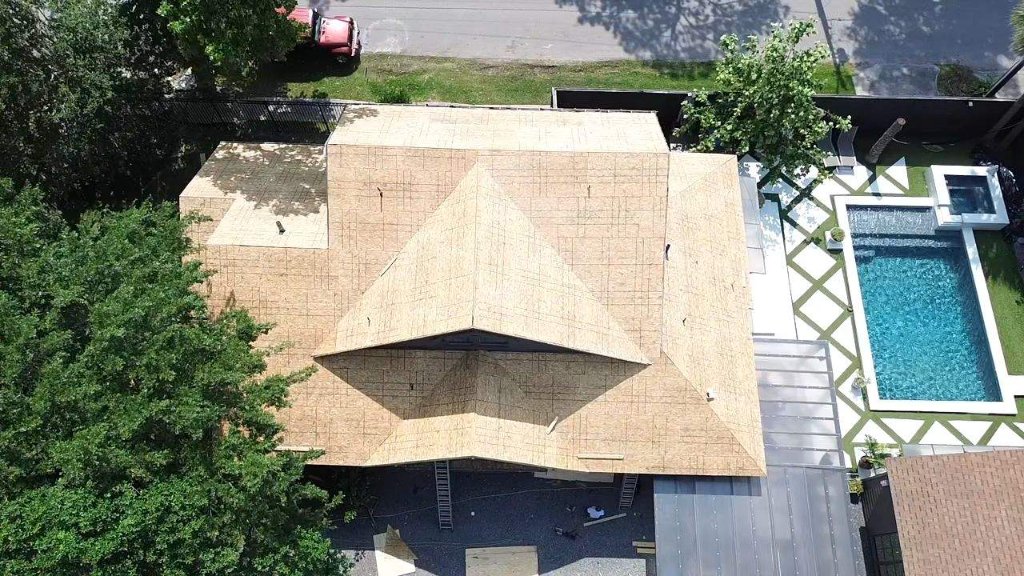
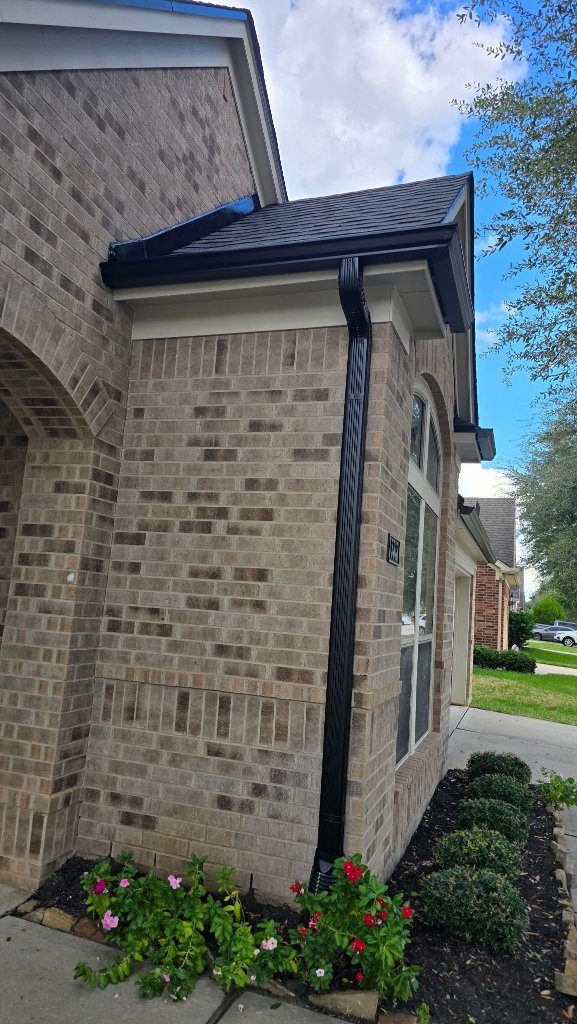
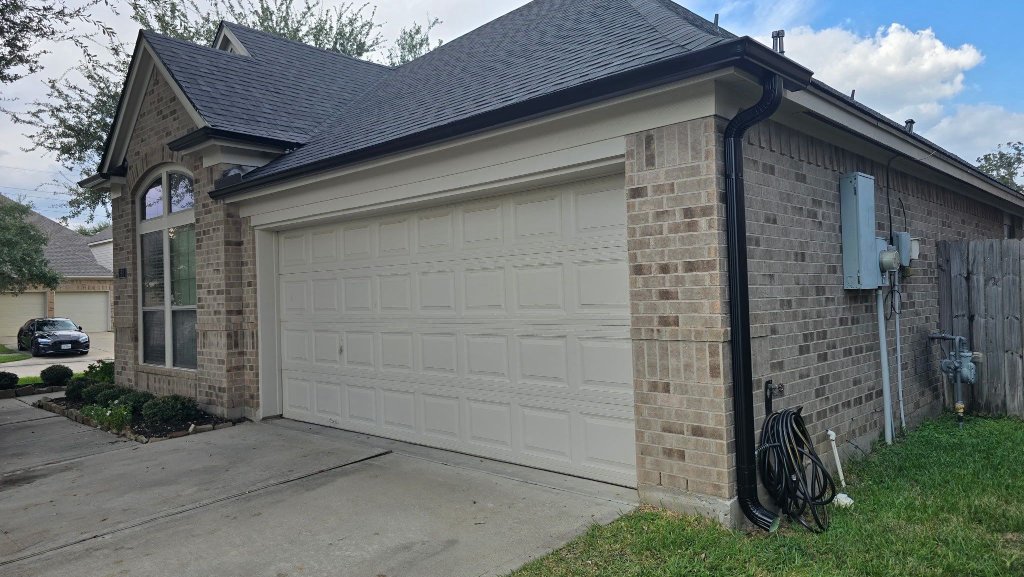
Real roofs on real houses, photographed on the job. Nothing here is a stock image.
Get a Free Attic Ventilation Inspection in Richmond, TX
We diagnose the problem before proposing work. If your attic ventilation is fine, we tell you that. Serving Richmond, Rosenberg, Missouri City, Katy, Sugar Land, Fulshear, and Fort Bend County.